
Exposed MongoDB Instances: A Threat Actor’s Goldmine?

Introduction
MongoDB? What is this? MongoDB is an open-source document-orientated NoSQL database management program. The software application is designed for scalability and large-scale data storage.
Yes, your guess is correct, threat actors love to target the instances with many publicly accessible.
This article will highlight a vulnerability disclosure I performed, finding exposed sensitive data from an organisation’s MongoDB database.
The Hunt Begins!
Threat actors can identify publicly accessible MongoDB instances in several ways. In this article, I will show the Shodan method.
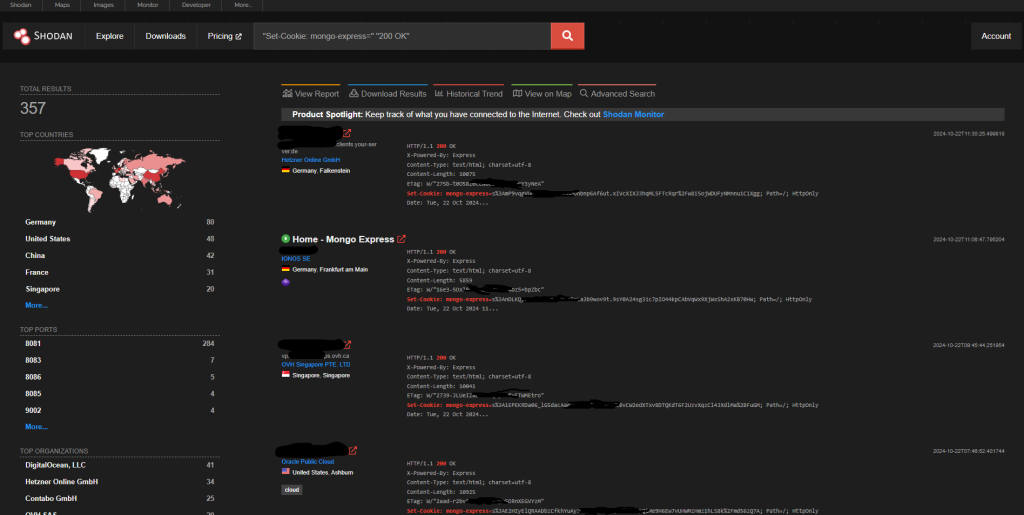
The below Shodan query will display all successful requests to MongoDB databases; Allowing threat actors to identify exposed databases.
"Set-Cookie: mongo-express=" "200 OK"
The current results as of (22/10/24) are the following:
- 357 exposed instances.
- The top countries are the follow, Germany, the United States, China, France and Singapore.
- 284 of the exposed instances are operating on port 8081.
The Disclosure
Please note, that impacted party was provided with a detailed report on the findings and has successfully fixed their instance being exposed.
The impacted party operates within the logistics sector. The data found potentially could have been abused for third-party compromise.
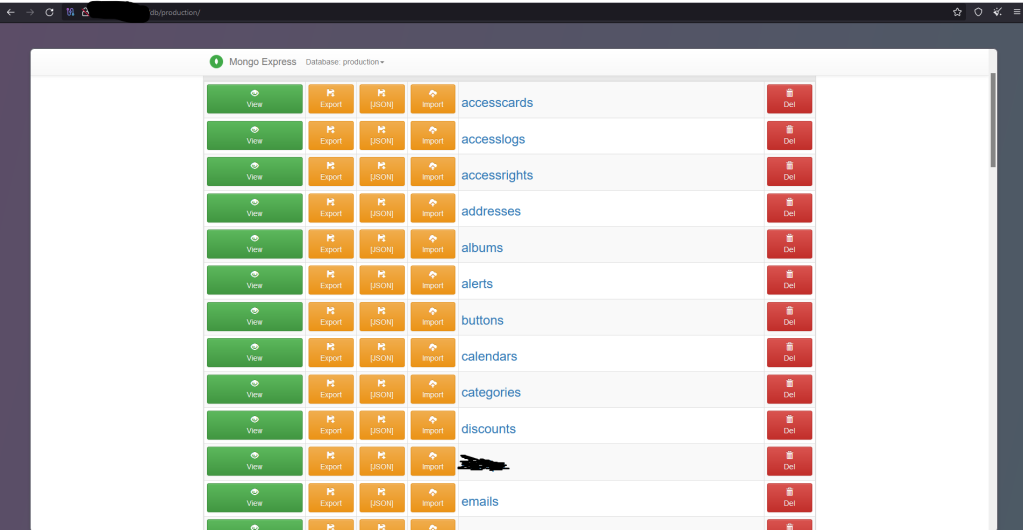
Exposed MongoDB instance.
This is just one example of multiple of a vulnerability disclosure I have conducted with exposed MongoDB instances.
In one previous case, I found an organisation exposing clear text email addresses, passwords, credit card information and SSH keys.
How to fix?
Simply put, basic mitigation authentication practices would prevent a threat actor from accessing the instance. Please see the following article for steps.
Conclusion
Overall, exposed MongoDB instances can spell disaster for an organisation. The low skill required for a threat actor to access an exposed instance makes it popular amongst threat actors.
Thanks for your time!